12 April 2026
How to Improve Your Basketball Handles: A Practical Guide
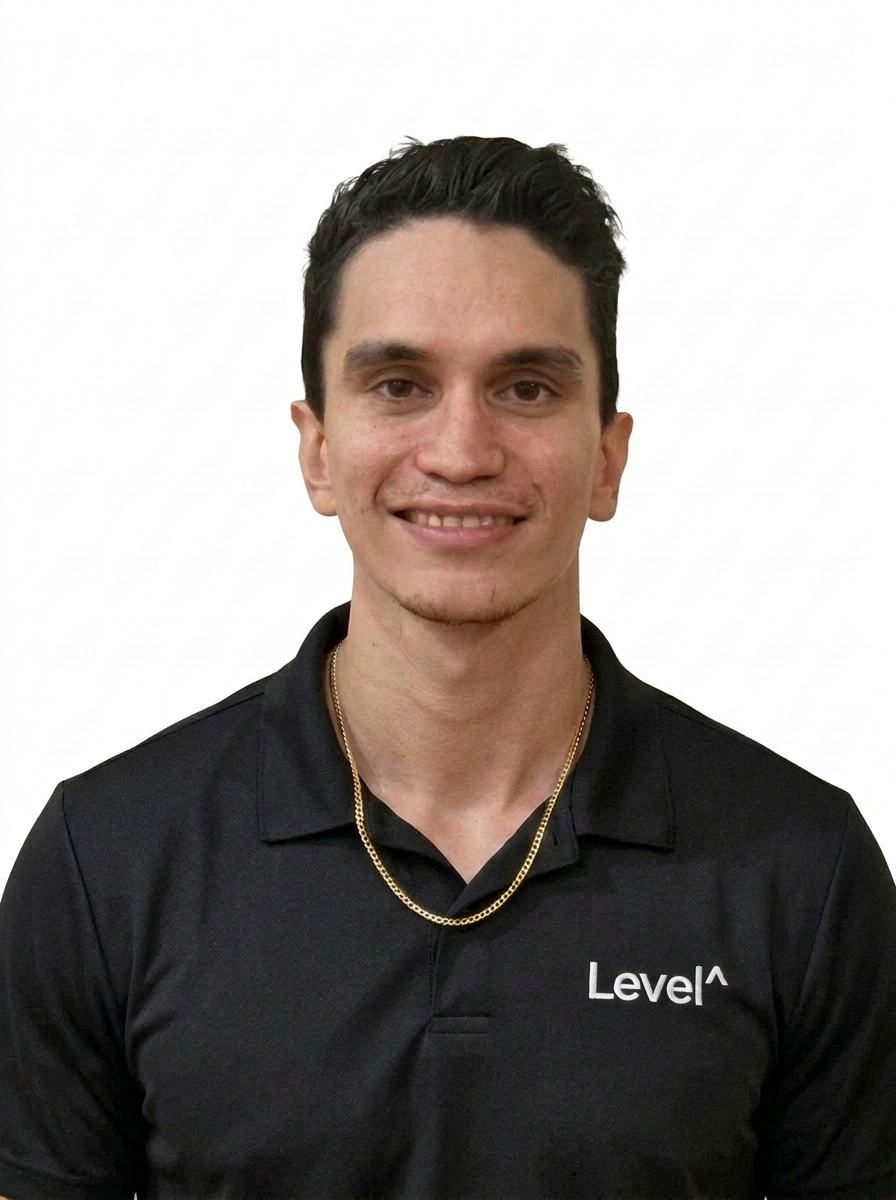
Joseph Johnson
Basketball Trainer, Level^ Academy
Ball handling is one of the most talked about skills in basketball, and one of the most misunderstood. Having good handles is not about doing flashy crossovers or embarrassing defenders on social media. It is about being able to control the ball under pressure and use it to make good decisions.
At Level^ Academy in Brisbane, we focus on building handles that actually translate to games.
What Good Ball Handling Actually Looks Like
The best ball handlers in the world share a few things in common. They keep the ball low and tight. They can change speed and direction without losing control. They see the floor while dribbling, not just the ball.
Good ball handling is functional. It allows you to get to your spots, create space for a shot, or find an open teammate. If your dribbling does not lead to one of those outcomes, it is wasted movement.
Start with Your Weak Hand
Most players have a dominant hand and avoid using the other one. This is the single biggest limiting factor for young ball handlers. If a defender knows you can only go one direction, their job is cut in half.
At Level^, we dedicate time in every session to weak hand development. The goal is not to make both hands equally strong overnight. It is to get the weak hand comfortable enough that it is no longer a liability.
Dribble with Your Eyes Up
One of the first habits we work on with younger players is getting their eyes off the ball. If you are looking down at the ball while dribbling, you cannot see what the defence is doing and you cannot make reads.
We use constraint drills where players must make decisions while dribbling. This forces them to develop feel for the ball rather than relying on sight.
Change of Speed Over Change of Direction
Players often focus too much on crossovers and not enough on pace changes. In game situations, a sudden burst of speed or a well timed hesitation is far more effective than a fancy dribble move.
We teach players to use speed changes to create advantages. A slow to fast attack catches defenders off guard far more consistently than a between the legs crossover.
Live Dribbling Versus Stationary Drills
Stationary ball handling drills have their place, especially for beginners building coordination. But the sooner players progress to live, game speed dribbling situations, the faster they improve.
At Level^, we integrate ball handling into shooting drills, decision making exercises, and competitive scenarios so that dribbling is always connected to a game outcome.
Consistency Over Complexity
You do not need 20 different dribble moves. You need two or three that you can execute at full speed, under pressure, without thinking. Master the basics and add complexity only when the foundation is solid.
The Level^ Approach
We believe ball handling is a skill that improves with intentional, structured practice. Random dribbling in the driveway will only take you so far. Targeted coaching with clear progressions and game context is what creates real improvement.
Want to sharpen your handles with purpose? Book a session with Level^ Academy and start training the right way.